Travelling to Seoul with rosacea: a practical plan
Seoul has hot, humid summers and cold, dry winters, and both can set off rosacea. Pack enough of your prescription creams, since brimonidine and oxymetazoline did not appear as skin products in the Korean drug database. Use SPF 30+ every day, and treat spicy stews, soju and hot saunas as experiments you control rather than things to fear.
Written by the Seoul Rosacea editorial team and medically reviewed by a Korean Board-Certified Dermatologist (AAD International Fellow · ASLMS member). Last reviewed: .
Which season is easiest for rosacea in Seoul?
Korea’s tourism organisation describes summer (June to August) as hot and humid, with Seoul’s average daily high near 29 °C in July and 30 °C in August, and a rainy season from the end of June to the end of July. Winter is cold and dry, averaging around 0 to 1 °C and often below freezing. Spring and autumn are milder, with large swings between morning and afternoon (VisitKorea climate page, checked 18 October 2026).
Each season brings triggers that people with rosacea commonly report: hot weather (75%), wind (57%), cold weather (46%), humidity (44%) and indoor heat (41%) in a National Rosacea Society survey of 1,066 patients (NRS survey, checked 18 October 2026). In a Japanese trial population, temperature changes topped the list, and pollen exposure was also reported.[1]
| Season | Weather | Triggers in play | What helps |
|---|---|---|---|
| Spring (Mar–May) | Mild days, cool mornings | Temperature swings, pollen, strong sun | Layers, daily sunscreen, sunglasses |
| Summer (Jun–Aug) | Hot, humid, rainy spell late June to late July | Heat, humidity, sun | Midday breaks indoors, cool drinks, a hat |
| Autumn (Sep–Nov) | Pleasant, around 15 °C, variable | Sun on clear days, temperature swings | Usually the gentlest season for heat-sensitive skin |
| Winter (Dec–Feb) | Cold and dry, often below 0 °C | Cold wind, indoor heating, hot baths | Scarf over the cheeks, richer moisturiser |
How do I protect rosacea on the flight?
Cabin air is very dry, which can leave the face tight and the eyes gritty. Keep a fragrance-free moisturiser and your prescription cream in hand luggage, in containers that meet liquid limits. If rosacea affects your eyes, lubricating eye drops help. Alcohol was a trigger for 52% of NRS survey respondents, so water is the easier choice on board. Skip heavy makeup during long flights so you can moisturise freely.

How should I handle sun protection in Seoul?
Sun exposure is the most common reported trigger (81% in the NRS survey). In Korean patients, the amount of sun exposure was linked to the development and severity of redness-type rosacea.[2] The AAD recommends a gentle, broad-spectrum sunscreen of SPF 30 or higher every day; fragrance-free formulas with zinc oxide or titanium dioxide are the least likely to irritate (AAD, checked 18 October 2026). Korean sunscreens are labelled with SPF and a PA rating for UVA protection; PA+++ or PA++++ is a sensible target. Outdoors, reapply every two hours and straight after swimming or sweating, as the AAD advises, and add a hat and shade at midday.
Will Korean food and soju make rosacea flare?
Spicy foods (45%), alcohol (52%) and hot drinks (36%) all appear in the NRS survey. Many Korean dishes combine two of these: a bubbling kimchi stew is both spicy and very hot. Reviews of diet and rosacea find many suspected food triggers but few controlled studies, so there is no need to avoid Korean food as a whole.[3] Let soups cool before eating, ask for milder versions (덜 맵게, deol maep-ge, "less spicy"), and enjoy the many cold dishes such as naengmyeon noodles.
Alcohol has also been studied for long-term risk. In a cohort of 82,737 US women, liquor and white wine were linked with a higher risk of developing rosacea, 53% higher at 30 g of alcohol a day or more, although an observational study cannot prove cause.[4] Soju is a spirit, often drunk in many small shots over a long evening. The AAD’s advice works well here: set a limit of one or two drinks and have a large glass of cold water after each.
Is a Korean sauna or jjimjilbang safe with rosacea?
Hot baths were reported as a trigger by 51% of NRS survey respondents, and hot baths or exercise were among the two most common triggers in Korean patients.[2] You do not have to skip the jjimjilbang (bathhouse), but keep hot-room visits short, choose the warm rather than the hottest pools, rest in the cool rooms, and drink cold water. A cool cloth on the face between rooms helps.
What should I pack for rosacea?
- Prescription creams and tablets in original packaging, with a copy of the prescription or a doctor’s letter.
- Enough brimonidine gel or oxymetazoline cream for the whole trip: in our search of the MFDS database (MFDS drug search, 18 October 2026), brimonidine appeared only as eye drops and oxymetazoline only as nasal products.
- If you run short, a Seoul dermatologist or pharmacist can check which formulations are available locally. Ivermectin cream and metronidazole gel are registered in Korea, but registration does not guarantee a pharmacy has your product in stock.
- A sunscreen and moisturiser you already tolerate; a new product on holiday is a gamble.
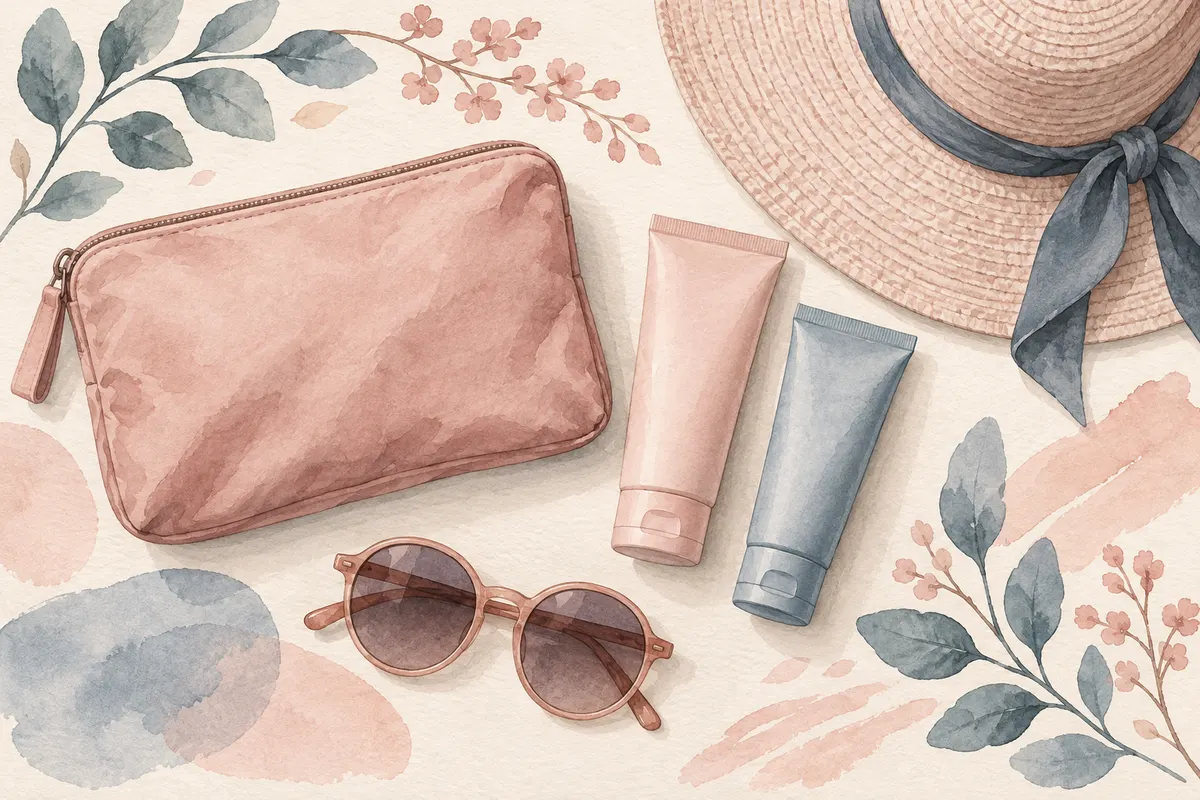
- A soap-free cleanser, a wide-brimmed hat, sunglasses and a scarf for winter wind.
- Lubricating eye drops if rosacea affects your eyes.
Can I see a dermatologist for rosacea in Seoul?
Yes. Ask for 주사 or 주사피부염 at a 피부과 (dermatology clinic); 주사 alone also means "injection", so add the clinic type when you search. Bring your medicine list and photos of flares. If you plan laser or light treatment, ask about expected swelling, bruising and follow-up before fitting it around your flight; recovery varies with the device and settings. The lasers and light guide explains the options.
Can I buy rosacea cream at a Korean pharmacy?
The simplest route is a quick dermatology visit: the dermatologist confirms the diagnosis and writes a prescription, and a nearby pharmacy fills it. Bring the generic names of your medicines, because brand names differ between countries.
Should I avoid kimchi with rosacea?
Not automatically. Spicy food is a common trigger but not a universal one. Try a small amount at room temperature and watch for flushing within the next hour.
Which months are easiest for a Seoul trip with rosacea?
If heat is your main trigger, autumn (September to November) is usually the most comfortable, with average temperatures around 15 °C. If cold wind bothers you most, late spring is a good alternative.
References
Bibliographic records retrieved from PubMed (U.S. National Library of Medicine).
- Yamasaki K, Miyachi Y. Perspectives on rosacea patient characteristics and quality of life using baseline data from a phase 3 clinical study conducted in Japan. J Dermatol. 49(12):1221-1227. PubMed: 36177741
- Bae YI, Yun SJ, Lee JB, Kim SJ, Won YH, Lee SC. Clinical evaluation of 168 korean patients with rosacea: the sun exposure correlates with the erythematotelangiectatic subtype. Ann Dermatol. 21(3):243-9. PubMed: 20523797
- Alia E, Feng H. Rosacea pathogenesis, common triggers, and dietary role: The cause, the trigger, and the positive effects of different foods. Clin Dermatol. 40(2):122-127. PubMed: 34819228
- Li S, Cho E, Drucker AM, Qureshi AA, Li WQ. Alcohol intake and risk of rosacea in US women. J Am Acad Dermatol. 76(6):1061-1067.e2. PubMed: 28434611