Rhinophyma: thickened nose skin in rosacea and its treatment
Rhinophyma is thickened, often bulbous skin on the nose, caused by fibrosis and enlarged oil glands; it is the phymatous change of rosacea. Caught early, while still inflamed, the thickening can be held back with tablets such as doxycycline or isotretinoin. Established thickening needs a procedure, usually partial-thickness excision, often with laser contouring, and the removed tissue is checked under the microscope.
Researched and written by Seoul Rosacea editors. Editorially updated: .
What is rhinophyma?
The ROSCO panel defines phymatous changes as facial skin thickening from fibrosis, enlarged oil (sebaceous) glands or both. They most often affect the nose, where they can give a bulbous shape, and they are one of the two features that diagnose rosacea on their own.[1][2] Rhinophyma is the name for this thickening on the nose; the AAD notes that phyma can also form on the chin, forehead, eyelids and ears (AAD treatment page, checked 24 October 2026).
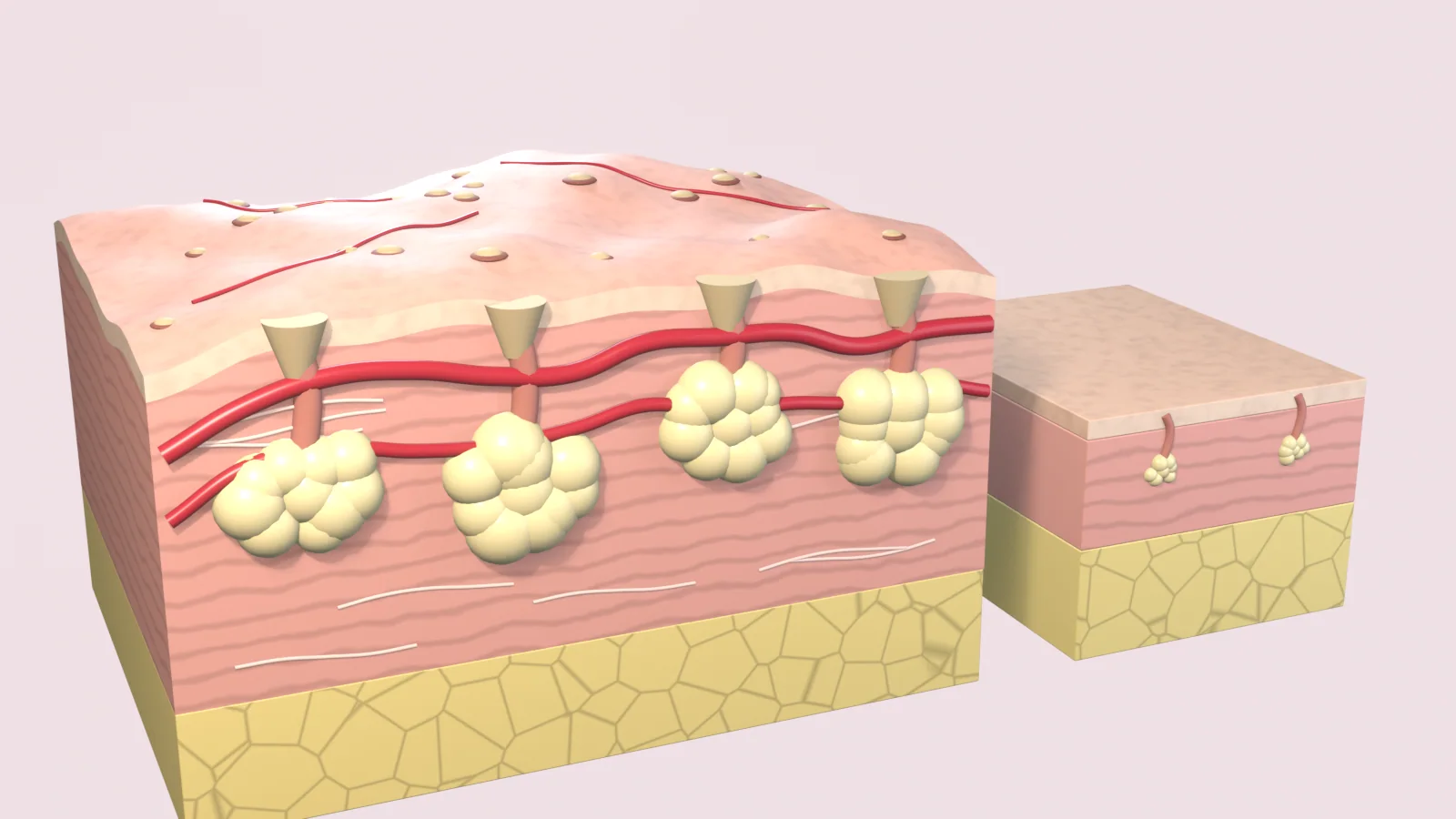
Under the microscope, rhinophyma shows enlarged oil glands, widened follicle openings plugged with keratin, and dense fibrous tissue (fibrosis) in the dermis, usually across the lower two-thirds of the nose.[3] In the four-subtype classification of the National Rosacea Society, this thickening is the phymatous subtype (phymatous rosacea).[4] In 2017 the ROSCO panel agreed to move rosacea diagnosis and classification from subtypes to a phenotype-based approach.[2]
Who gets rhinophyma?
According to the AAD, fewer people with rosacea develop thickened skin, men more often than women, and it can occur when rosacea goes untreated for years (AAD symptoms page, checked 24 October 2026), and the NHS describes thickened skin, mainly on the nose, that usually appears after many years (NHS, checked 24 October 2026).
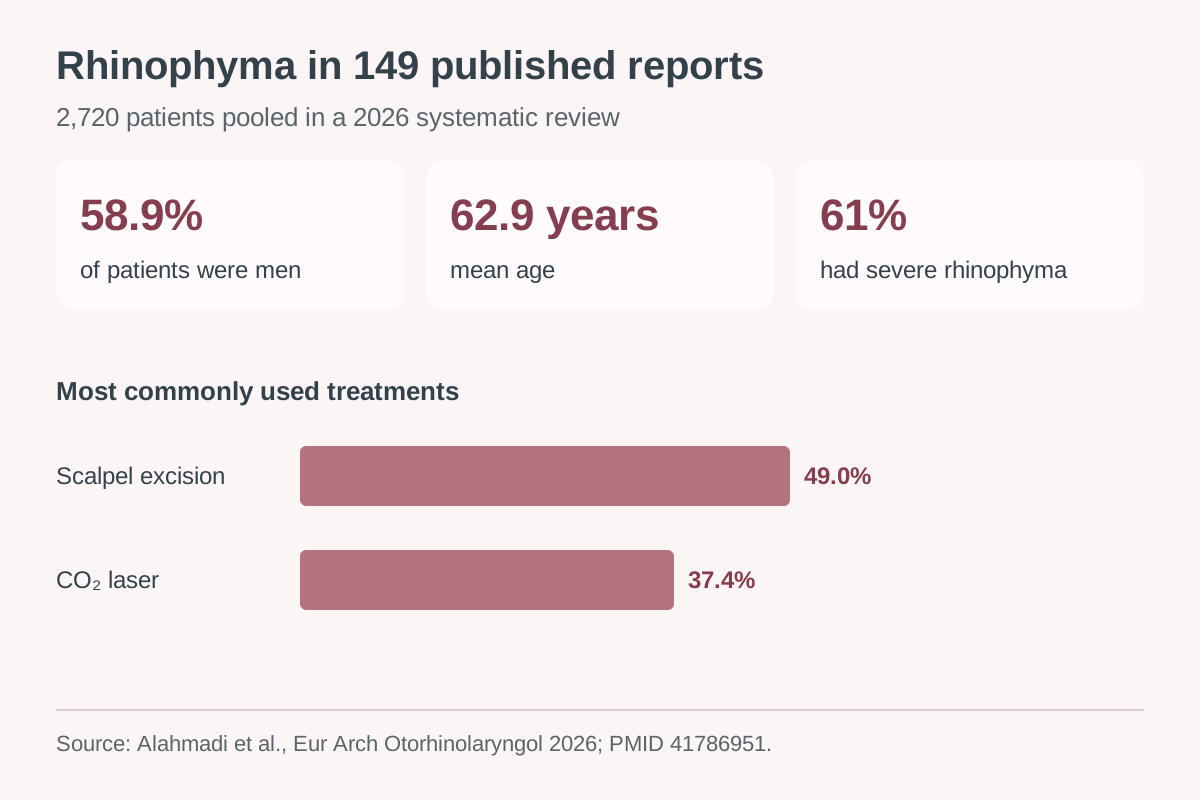
A 2026 systematic review pooled 149 case reports, case series and observational studies covering 2,720 patients: 58.9% were men, the mean age was 62.9 years and 61% had severe rhinophyma. Older age and male sex were the main risk factors.[5] A 2026 report of two men, aged 65 and 76, describes rosacea present for more than 10 years and noses that had enlarged over the previous five to seven years.[6]
Rhinophyma does not always follow obvious rosacea. A 2026 case report notes that it can occur without overt rosacea and that not all rosacea progresses to thickening; its 71-year-old patient had no history of flushing, redness or pustules.[3]
Rhinophyma treatment by grade
Severity decides the treatment. A 2026 evidence review of studies published from 1990 to 2025 found that tablets such as doxycycline and isotretinoin help mainly in early, inflammatory disease (Clark Grade I), while established, fibrotic rhinophyma (Grades II–IV) generally needs surgery. The review rates the supporting evidence at level III–IV, and prospective comparative studies remain limited.[7]
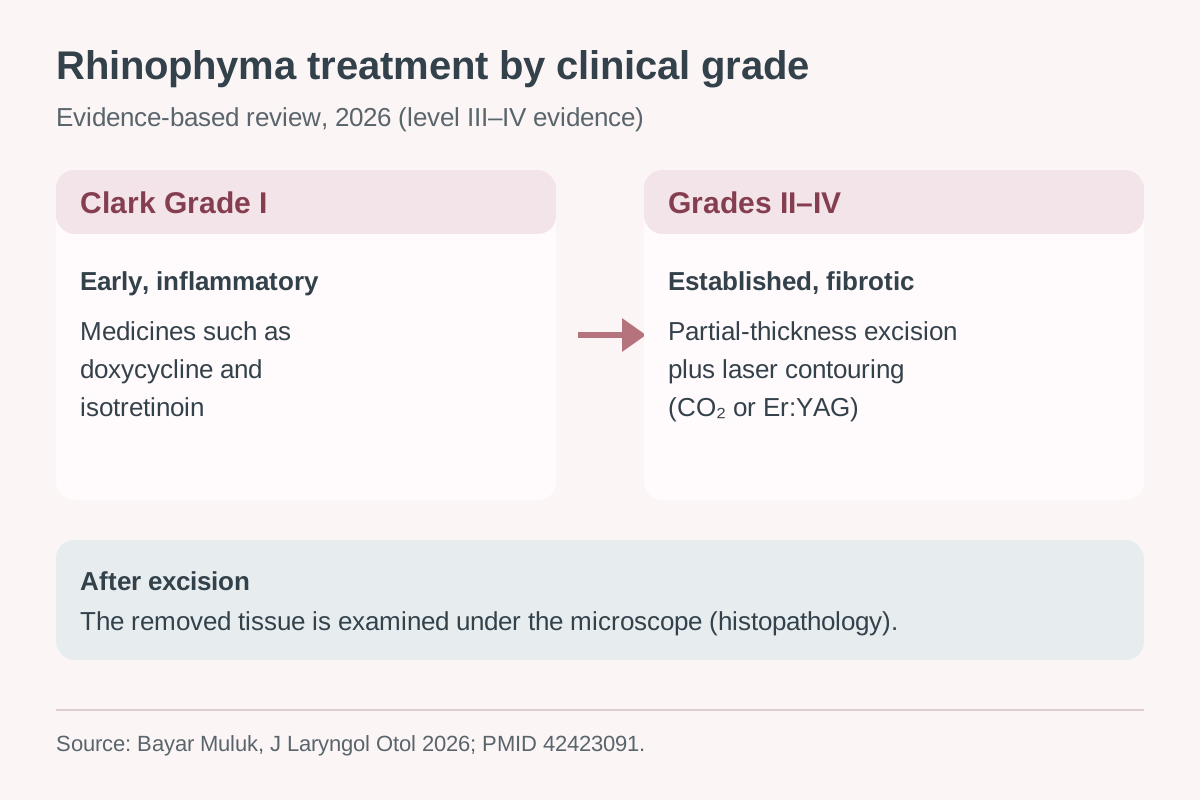
Tablets hold the thickening back rather than remove it. The AAD says low-dose doxycycline, a dose too low to act as an antibiotic, can be used long term to prevent further thickening, and that isotretinoin can stop thickened skin from growing thicker but cannot remove what is already there; isotretinoin can cause serious side effects and is not an option for everyone (AAD treatment page). The earlier phyma is treated, the better, because the thicker the skin, the harder treatment becomes. More on these tablets is in rosacea treatment options.
The AAD advises seeing a dermatologist once firm, round bumps or thickening appear on the face, and a rosacea diagnosis visit can then cover any redness and bumps alongside the nose.
Rhinophyma surgery: excision, laser and electrosurgery
For established rhinophyma the review supports partial-thickness sharp excision combined with laser contouring, using CO₂, Er:YAG or newer blue lasers, to improve bleeding control, tissue preservation and the cosmetic result.[7] The AAD lists surgical removal with a scalpel, laser surgery, radiofrequency and electrosurgery, and advises choosing a dermatologist or dermatologic surgeon experienced in treating thickened rosacea skin (AAD treatment page).
Across the 2,720 pooled patients, scalpel excision (49.0%) and CO₂ laser (37.4%) were the most commonly used treatments.[5] Electrosurgery applies high-frequency electric current to cut and coagulate tissue. In the 2026 report of two men, one had the thickened tissue removed this way under local anaesthetic, with good control of bleeding.[6]
Tangential excision in a 2026 case report
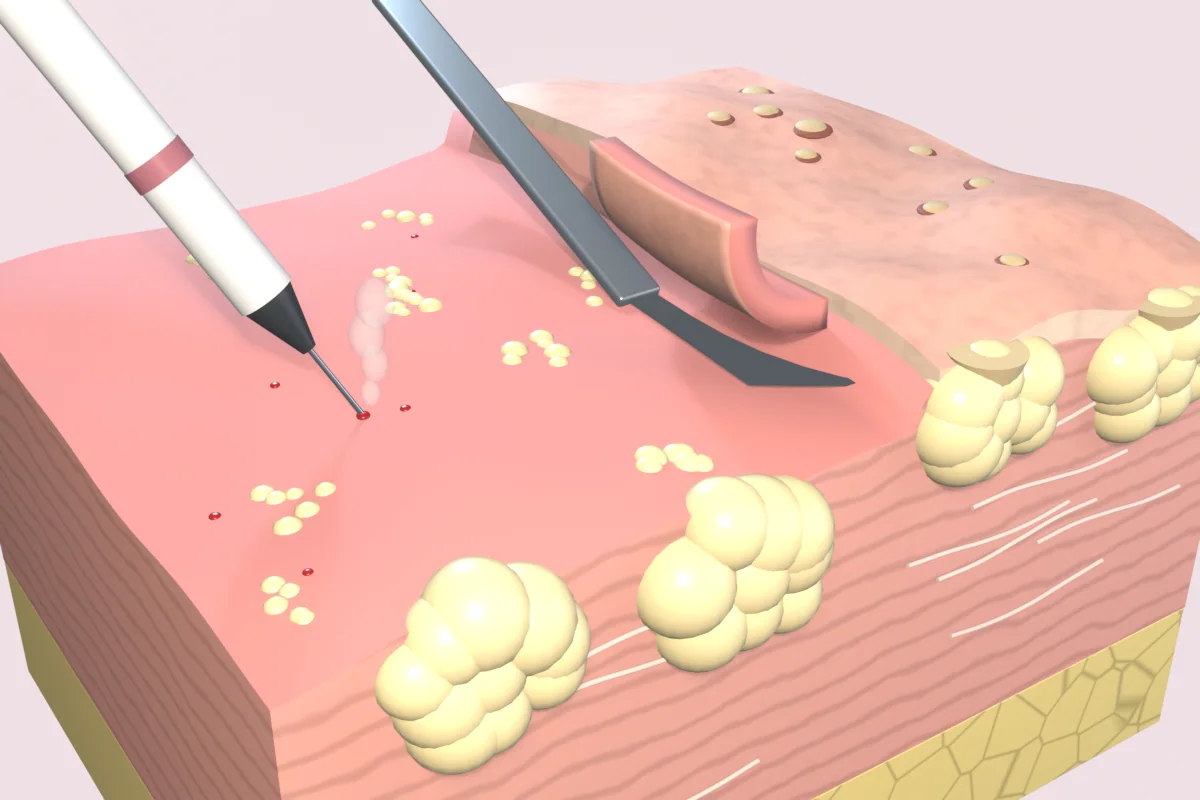
One surgical team described each step in detail.[3]
Step 1 of 5: Biopsy first
A small sample was taken before surgery to confirm rhinophyma and rule out skin cancer, particularly basal cell carcinoma.
Step 2 of 5: Marking and local anaesthetic
The contours of the nose were marked, and local anaesthetic with adrenaline was injected to numb the area and reduce bleeding.
Step 3 of 5: Thin-layer excision
A scalpel blade and a needle-tip electrocautery removed the thickened tissue in thin layers parallel to the skin, leaving the deep oil-gland and follicle structures from which new skin grows.
Step 4 of 5: Depth and symmetry checks
The surgeons stopped in each area when the yellow-white oil-gland lobules gave way to a smooth, glistening surface, and checked symmetry with the head of the table raised.
Step 5 of 5: Dressing
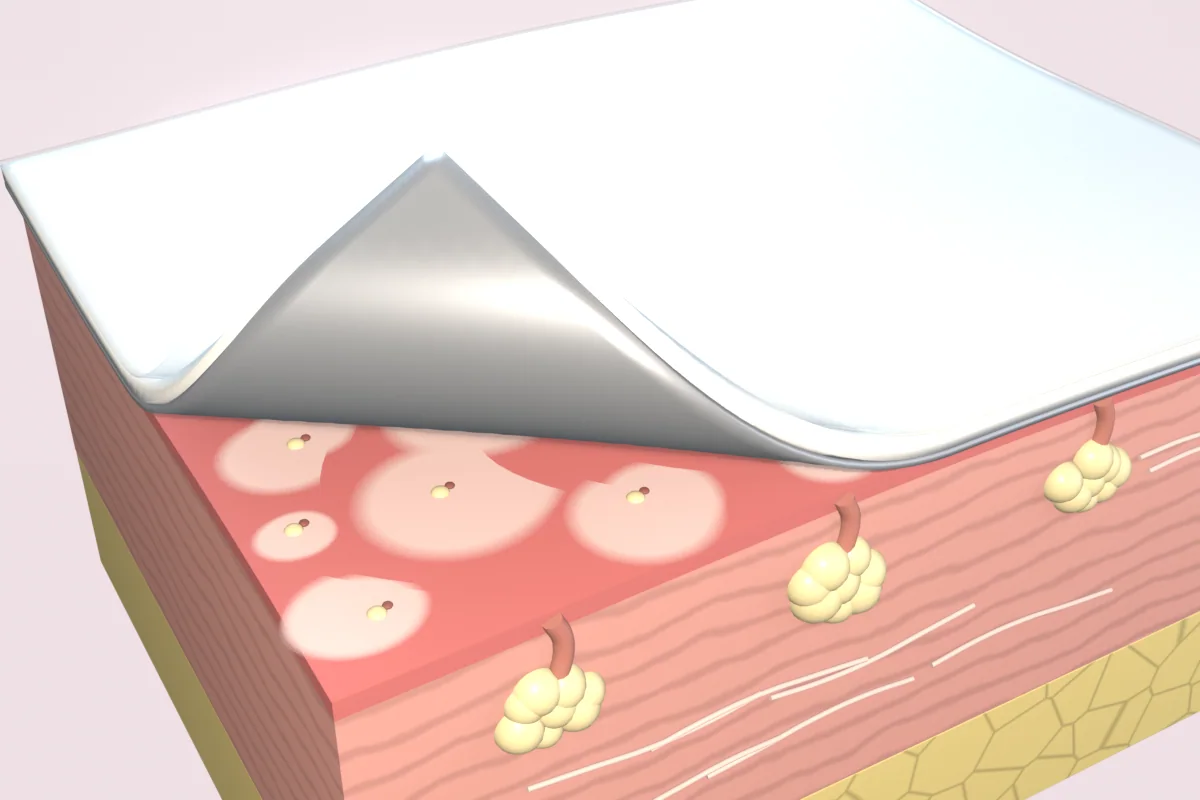
Bleeding points were sealed with brief cautery, the wound was rinsed with saline and covered with a silver dressing, and it was left to heal on its own (secondary intention).
Healing after rhinophyma surgery
A wound left this way heals from the gland and follicle remnants in the skin. The case report puts new-skin cover at about 2 to 4 weeks for this technique; its patient went home the same day with advice on gentle face washing, avoiding knocks and sleeping with the head raised.[3]
| When | What happened |
|---|---|
| Day 0 | Same-day discharge with pain relief and preventive antibiotics |
| Day 2 | First dressing change |
| Days 2 to 10 | Dressing changed every 48 to 72 hours |
| Days 10 to 20 | Dressing changed every 3 to 4 days as oozing declined |
| Day 20 | Healed with a smooth contour; two small raw areas treated with fusidic acid ointment |
| Day 27 | Skin fully covered |
| Next 12 weeks | Silicone sheet worn nightly |
The removed tissue goes to the laboratory. The 2026 review calls this histopathological assessment essential because hidden cancers may coexist within rhinophyma tissue,[7] and the case report names basal cell carcinoma as the most frequent, found incidentally in about 1.4% of one large series and up to 3% in others.[3]
Thickening can return, particularly after superficial excision, because tissue left deep in the skin can keep growing. Long-term follow-up, sun protection and continued care of the underlying rosacea belong to the plan.[3]
Is rhinophyma caused by alcohol?
No. Rhinophyma was long linked with heavy drinking, but a 2026 case report notes that this association has been refuted and that the condition occurs independently of alcohol.[3] Alcohol can still set off rosacea flushing.
Can rhinophyma be reversed without surgery?
Not once the skin has thickened. Doxycycline and isotretinoin can help prevent further thickening, but the AAD notes that isotretinoin cannot remove thickened skin that is already there; that needs a procedure.
Can rhinophyma affect breathing?
It can when advanced. The AAD notes that thickening on the nose can cause trouble breathing, and a 2026 case report describes nasal airway obstruction in advanced cases.[3]
How long does healing take after rhinophyma surgery?
For thin-layer excision left to heal on its own, the 2026 case report puts new-skin cover at about 2 to 4 weeks; its patient’s nose was fully covered by day 27.[3]
Does rhinophyma come back after surgery?
It can, particularly after superficial excision, so follow-up continues after the wound has healed.[3]
References (7)
Author, title and journal details follow each paper’s PubMed record at the U.S. National Library of Medicine.
- Schaller M, Almeida LMC, Bewley A, Cribier B, Del Rosso J, Dlova NC, et al. Recommendations for rosacea diagnosis, classification and management: update from the global ROSacea COnsensus 2019 panel. Br J Dermatol. 182(5):1269-1276. PubMed: 31392722
- Tan J, Almeida LM, Bewley A, Cribier B, Dlova NC, Gallo R, et al. Updating the diagnosis, classification and assessment of rosacea: recommendations from the global ROSacea COnsensus (ROSCO) panel. Br J Dermatol. 176(2):431-438. PubMed: 27718519
- AlBahlal A, Alkhwildi LA, Alwathnani YK, Alawirdhi B. Tangential excision of rhinophyma with electrocautery and healing by secondary intention: A case report. JPRAS Open. 52:337-343. PubMed: 42751264
- Bae YI, Yun SJ, Lee JB, Kim SJ, Won YH, Lee SC. Clinical evaluation of 168 korean patients with rosacea: the sun exposure correlates with the erythematotelangiectatic subtype. Ann Dermatol. 21(3):243-9. PubMed: 20523797
- Alahmadi M, Alghamdi S, Alsaedi M, Alshurafa H, Alhejaili B, Alalyani M, et al. Rhinophyma: a systematic review and meta-analysis of its epidemiology, associations, and treatment outcomes. Eur Arch Otorhinolaryngol. 283(6):3573-3583. PubMed: 41786951
- El Abbade H, Baybay H, Alheyasat R, Elloudi S, Mernissi F. Rhinophyma: A Report of Two Patients Managed With Electrosurgery. Cureus. 18(7):e112465. PubMed: 42577983
- Bayar Muluk N. Evidence-based management of rhinophyma according to disease severity and clinical grade. J Laryngol Otol. 140(9):963-967. PubMed: 42423091